
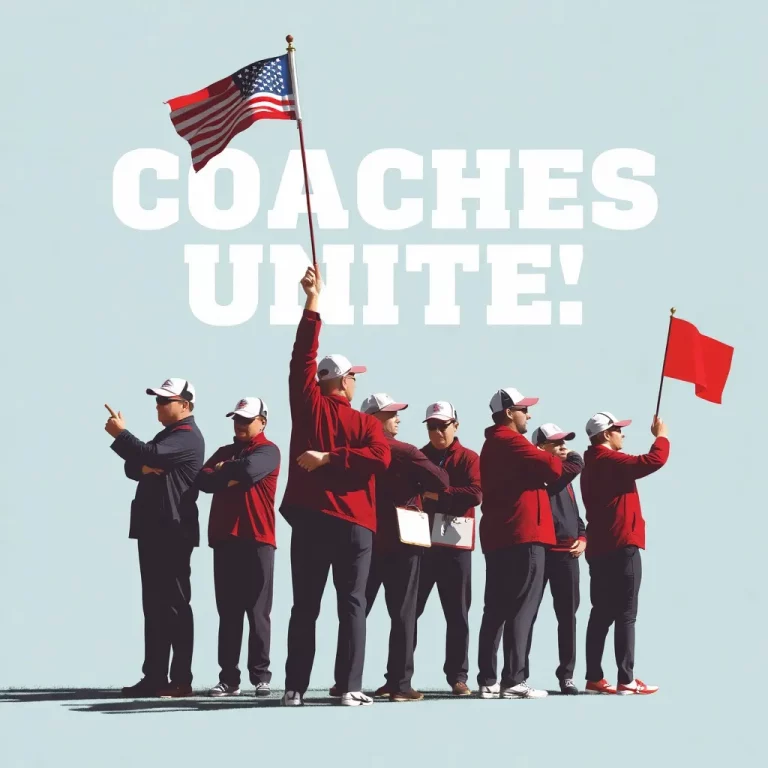
In a notable development for college sports, coaches from across the nation are coming together to push for a significant change in college football: the establishment of a coaches’ union. This initiative is finding a resonant voice among a growing number of college football coaches, who believe that a formal union could bring vital stability to a sport that has been rocked by unpredictability in recent years.
Coaches argue that a structured collective bargaining entity could help address pressing issues such as scheduling, transfer windows, and the overwhelming pressures of the current collegiate model. One coach emphasized that a union could serve as “the key to ending the chaos.” This sentiment is echoed throughout locker rooms and meeting halls, highlighting the urgent need for a unified voice in the coaching community.
A particular point of concern is the overlapping timing of the transfer portal. Coaches have noted that the current system, where the portal opens before the season ends and again in the spring, is causing chaos that undermines team stability. A unified coaching body could advocate for a single, well-timed transfer window, ideally in the spring. This would not only help coaches maintain team continuity but would also protect student-athletes during critical competitive periods.
In addition to transfer concerns, coaches are also highlighting excessive practice expectations and the lack of consistent regulations as alarming issues. They envision a world where a collective framework sets uniform practice limits, mirroring the way professional leagues manage workloads. This could lead to healthier athletes and less burnout, bringing equity to programs that may not have the same resources as larger football schools.
As college football stands at a significant crossroads, the call for a coaches’ union is growing louder. It reflects a broader struggle to balance revenue generation, athlete empowerment, and coaching control. Many believe that establishing a formal union could pave the way for restoring order and predictability in a sport often marked by turmoil. If successful, this initiative could reshape college football, providing much-needed structure and attention back to the game itself.