
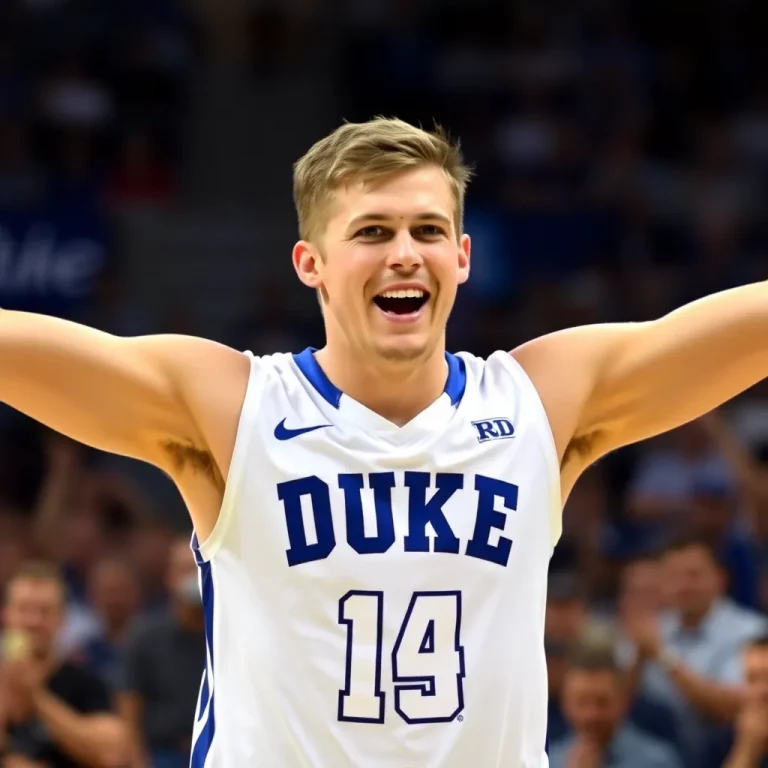
Durham, N.C. — In a thrilling NCAA basketball showdown, Cooper Flagg of Duke put on a display of athleticism as he dunked over Guillermo Diaz Graham from Pittsburgh during the second half of their game on January 7, 2025. Flagg’s remarkable play helped Duke secure a decisive win at home, showcasing his talent and solidifying his status as one of the top players in college basketball.
Meanwhile, in South Carolina, head coach Dawn Staley was seen questioning a controversial call during a tense matchup against Texas A&M on January 9, 2025. Staley’s expressive gestures highlighted the high stakes of the game, as both teams sought to climb the rankings and make their mark this season.
In other news, there is an ongoing conversation about changes to NCAA governance that could reshape college sports. A proposal from the nation’s four largest conferences — the SEC, Big Ten, Big 12, and ACC — aims to give them increased authority over rule-making and policy decisions, especially concerning postseason events like March Madness.
Reportedly described as a “working document” ahead of the upcoming NCAA convention, this proposal could allow these power conferences to manage postseason championships, a lucrative venture valued at over $1 billion. Currently, these events are overseen by the NCAA, but the push for autonomy is only growing.
SEC Commissioner Greg Sankey remarked that the proposal is a starting point for discussion. He shared that there have been several months of discussions around governance and decision-making processes as leaders from Division I consider necessary changes. The aim is to find a structure that aligns with the evolving landscape of college athletics.
The discussions follow a significant settlement agreement that allows schools to begin offering payments to athletes, with the potential for schools to provide up to $20.5 million each. This shift in the NCAA model reflects a transition taking place as college sports begin to embrace a more professionalized approach.
As these conversations progress, the focus remains on ensuring that the essence of what makes college athletics special is preserved, while also adapting to the changing environment of the sport.